

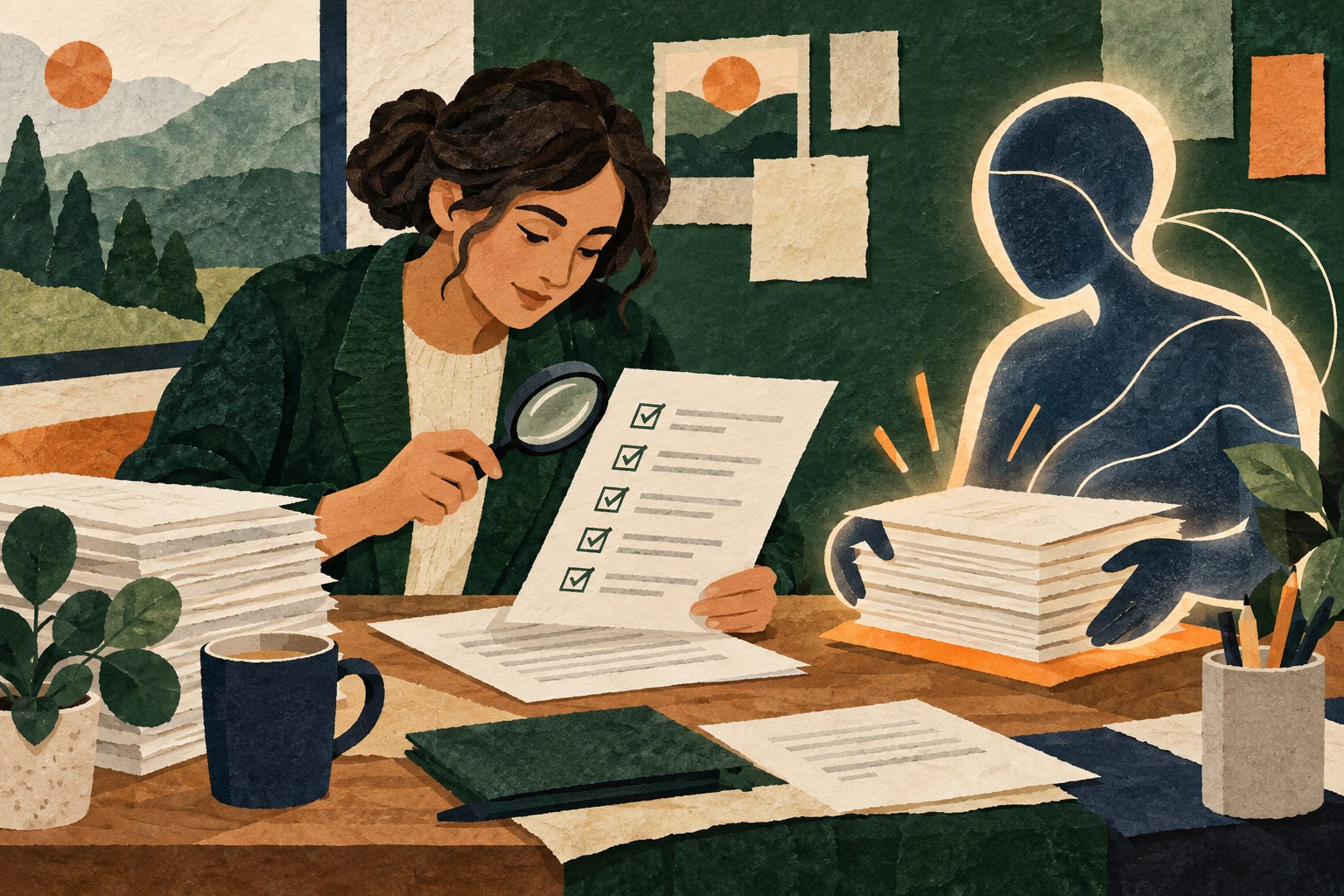
When AI does a large piece of the work, it is tempting to describe the human role as oversight.
That word is doing a lot of work.
The Associated Press reported on September 18 that Anthropic says Claude is now involved in about 90% of its research and development work, with the model leading 26% of that work under human supervision. Anthropic also says the system is not operating autonomously. Those are company-reported measures, not an independent benchmark for every workplace. Still, they put a useful leadership question on the table.
What does human direction actually mean?
Because being nearby is not the same thing as directing the work. Giving AI a prompt and then watching it produce something polished can become what Glean termed “bot sitting.” You are present. You are involved, sort of. But presence is not the same as agency.
AI only works well when the human knows when to push back, when to ask for something different, and when to slow the whole thing down. The words matter. The goal matters. The audience matters. The nuance matters. AI is not just receiving a command. It is calculating from the language you give it, and sometimes it will move quickly in a direction you did not intend.
That is where the leadership tension lives.
At work, the risky moment is often the first draft. AI gives you something that sounds competent, and because it sounds competent, you move it along. You present it. You approve it. You treat speed as evidence that thinking happened.
But if you take the first draft without really reviewing it, there is a knowledge gap. You have an output, but you may not have acquired the knowledge behind it. There is something different about using your own brain to extract, wrestle with, and shape an idea. Not pen and paper literally, unless that is your thing. But the act of thinking still matters.
AI can help us move faster. It can also let us live through someone else’s thinking and mistake that for learning.
So before an important AI-assisted deliverable moves forward, I would ask three questions.
What is the goal before we start?
Who is this for, and what outcome are we trying to create?
When the result comes back, what am **I not thinking about that could make this better for that audience?**
Not every task needs a leadership retreat in miniature. Some things are small. But when the work matters, the human part cannot be reduced to the final click.
Direction is not watching AI finish the work. Direction is knowing what you are asking for, recognizing when the answer is not good enough, and staying responsible for the judgment the work requires.
Check your AI Fluency for free: www.checkaifluency.com
Source: Associated Press, “Anthropic says its model Claude is helping to build the next version of itself”
https://apnews.com/article/anthropic-claude-ai-model-self-improvement-4d3a7430f57cbc7c39e1c5f2b7d7e132